Tuesday, August 9, 2011

The Dismal Science

This is a picture of the Earth from space:

If you were an alien cruising by the planet in your '64 X2001 T-bird in the late summer of 2008 A.D. this is what you would see. Aside from noticing that the Earth is flat, apparently, you would also see all of the industrialized areas of the planet lit up. If you felt like it, you might decide to make a pit stop and create a few crop circles or abduct a hillbilly.

Now zoom 3 Earth years ahead. You read the Milky Way Journal and the Galactic Economist magazine so you've heard about the financial crisis on Earth. So this time, when you swing by you expect to see a dark planet with pygmies in mud huts. Instead, as you put the top down and roll down the window you see this:

The same thing! How can that be? It seems as if nothing has changed. The reason is because it hasn't.

The only thing that actually changed is the magnetic polarity on computer hard drives in some of the computers on the planet and the voltages being processed in their chips. So now the Dow Jones Industrial Average number is 11,239 ("10101111100111" in binary instead of what it was last time you came by - "11011010110000" - woah!) and the yield on 10 Year Treasuries is listed as 2.18% ("DA" in hexadecimal instead of "18C" like it was before - incredible!) . There are similar differences in the numbers stored in computers across the planet. Aside from that, though, the same buildings stand, the same people are running around, and the same knowledge of science and mathematics exists among the Earthlings.

So you pull the power out of your X2001 and begin to descend into the Earth's atmosphere to take a closer look (or maybe to ride in a basket on a bicycle in front of the moon) and you notice that there are, in fact, noticeable differences. Bubba, whom you abducted 3 years ago for medical experiments, doesn't live in his house anymore and there is a sign out front that says, "Bank Owned." So you think to yourself, "Huh, maybe this time I'll grab Granny from her trailer." When you get there, though, you realize that Granny has moved in with one of her children in Phoenix. You consider going there to pick her up and then decide against it because Phoenix sucks (you remember that from when you went there on March 13, 1997 and checked the place out for an hour). Bewildered, you return to Xenu to tell your friends about the inexplicable changes on Earth.
"Vxyvncu, you're not going to believe this..."

----------------------------
This parable demonstrates how unnecessary the recent changes in the standard of living have been. Mankind has no less capacity to produce than it did 3 years ago. Now, however, because of changes in debt-to-GDP and asset-to-liability ratios people have lost their homes, standards of living across the world have dropped, and people are not able to live as well as they did before those numbers changed on computer hard drives.

Of course, most people will say that these changes were brought about by money transferring or disappearing altogether. But money is simply an agreed-upon concept that we have created. It is an abstraction that we assign value to so that we can have a standardized medium of exchange. It does not determine or limit what we are capable of doing.

For tens of thousands of years Mankind lived, and produced, without a standardized medium of exchange. People bartered goods and services that they believed were comparable in value. The invention of currency, however, radically altered society and we went from the Stone Age to the Nuclear Age in the blink of an eye. This publication would argue, however, that the usefulness of currency has run its course and shown its limitations and downsides. The time has come to develop a new system for the exchange of goods and services based on entirely different principles.

Og learns to speak

My proposal is that we create a system whereby everyone does all they can to contribute to the collective welfare. Those who are good at inventing flying machines will do just that. Others who are skilled carpenters will continue to build. Without question, some will give more than others and receive no more material benefit in return. Undoubtedly this will require an evolution of Consciousness where Mankind realizes that he and all Life are a part of the Cosmic Soul and that any advantage he gains over others is merely illusory because he is the others.

Perhaps the failure of the current economic system will prompt this change. When things are bad enough, our species may decide at an individual and collective level to do things differently. Fortunately, we have words to guide us:

Imagine no possessions
I wonder if you can
No need for greed or hunger

A brotherhood of man

Imagine all the people

Sharing all the world


You may say that I'm a dreamer

But I'm not the only one

I hope someday you'll join us
And the world will live as one

He Imagined

Until then, that'll be $50. I accept PayPal and all major credit cards.

Monday, August 8, 2011

The Way of the Samurai

In July of last year I posted an article entitled, “Bushido: The Way of the Warrior.” In that post, I attempted to convey my understanding of the samurai ethic of Bushido (literally, the "Way of the Warrior"). Here are excerpts from the post which contain its essence:
The starting point for shifting one's point of view to mirror that of a warrior's begins with recognizing and accepting one's own impending death. Recognition and acceptance of that fact not only focuses the mind on the value of every moment but also frees one from all illusions of permanence and the fear and attachment that naturally follows...
With the acceptance of his own death, then, and the conclusion of the play already determined, the warrior is now free to act in the most impeccable manner, without fear of failure or an ounce of hesitation. That freedom actually results in the flawless execution of every act and, ironically, creates the greatest possibility of success in any endeavor.
I. Correcting the Record

I have come to realize that my understanding of what it means to be samurai and, accordingly, to follow the Way of the Warrior, were severely lacking. At the time, my understanding of the purpose of accepting one's death was limited only to its practical application in action. I failed to see the Way's higher meaning. I will now attempt to correct the record.


To help understand the true function of a samurai’s acceptance of his own death, we must first explore the greater circumstance in which we find ourselves. With that established, its function will become apparent.


II. The Inner War
- The Cosmic Struggle within Ourselves

Our lives are filled with challenges. Sometimes it seems as if we are in a constant struggle with people and situations that seem to know how to find the weak links in our armor. While this interpretation is natural and easy to accept, it is an illusion - for many of our struggles in the world are merely dramas within which actors are playing important roles, that can illuminate the ultimate battle each of us has to fight within ourselves – the battle against our own Darkness.


And this Inner War may even serve a greater purpose than we realize; for the struggle within ourselves may only be a microcosm of a larger conflict – one battle in a larger war.


According to the ancient religion of Zoroastrianism, the Universe is the battleground of a cosmic struggle between the forces of Ahura Mazda, the Creator of truth and order, and the forces of Ahriman, who represents chaos and destruction. Man has an active role to play in the conflict and his actions can serve to further the interests of either side. As such, it is his responsibility to conquer the evil within himself and do his part.


A similar concept can be found in the Kabbalah, the mystical tradition of Judaism, in which Armageddon is not the battle at the End of Times but rather the War between Gog and Magog, the battle between Light and Darkness, that takes places in every soul.


Now that the context of the battle has been established, this next part will deal with the struggle itself.


III. Peace


The television show, Highlander, brilliantly portrayed this struggle and its resolution in a three-part episode in which MacLeod faced an ancient Zoroastrian demon named Ahriman, who only appears once every thousand years and against whom a champion is chosen to fight. The fate of the world rests upon the champion's successful defeat of Ahriman in this cosmic cycle. Ahriman takes the physical form of many of MacLeod's friends and foes, confusing and enraging him, and after taunting him extensively, seems invincible. The more MacLeod struggles, the more he seems powerless to stop Ahriman. Finally, MacLeod realizes that the demon is deriving its power from his own hatred and anger and he understands that in order to defeat Ahriman, he must defeat the darkness within his own self.


In the final confrontation, the demon appears and offers MacLeod various weapons, urging him to exploit the hate that he has for the demon and to strike him down. MacLeod rejects the offer, instead doing qi gong breathing exercises to cultivate peace within himself. In the scene that follows, MacLeod is seen resisting the attacks of the various manifestations of the demons, negating them with the movements of his breathing exercises. MacLeod is heard saying:


"I become one with everything...I become one with you...Because I am everything I am nothing...Because I am nothing you are nothing...Without my anger, you have no substance...Without my pride, you have no form...Without my hate...you have no being."

In a final attack the demon lunges at MacLeod, who is in a deep meditative state, and against whom the attack is useless. Ahriman recognizes he has been defeated and becomes furious. MacLeod simply crouches down along a wall and says, “It's time for you to leave. You have no place here,” to which Ahriman says, “I'll always be a part of you.” MacLeod, smiling, answers, “You always were.” With that Ahriman is defeated in this iteration of the 1,000-year cycle.


MacLeod battles his demons. Click here to watch the scene at 40:30.

A similar concept is portrayed in Star Wars Episode V: The Empire Strikes Back. Luke Skywalker is training to be a Jedi with Master Yoda on the swampy planet Dagobah when he hears something coming from a nearby cave. Curious, he goes to investigate further. Turning to Yoda, who is quietly looking down and waiting, he says, “What's in there?” “Only what you take with you,” Yoda replies. Skywalker straps on his belt with his light saber. Yoda, without looking up, says, “You will not need them.” Disregarding the advice, Skywalker then enters the cave and is confronted with the image of Darth Vader. In fear, he draws his own light saber and strikes at Vader, whom he beheads. Vader's head rolls onto the ground and the mask burns off revealing Skywalker's own face. He is then forced to confront the fact that Vader's evil is a part of himself.


Luke Skywalker confronts his own darkness in The Empire Strikes Back. Click here to watch the scene.

Before he leaves to rescue his friends, Yoda warns Skywalker about the dangers that await him. He says, “Remember, a Jedi's strength flows from the Force. But beware. Anger, fear, aggression. The dark side are they. Once you start down the dark path, forever will it dominate your destiny.”


The cartoon Samurai Jack also portrayed this struggle in a brilliant manner. An unusually intelligent show, its dramatization of the struggle against one's own darkness was nothing short of perfect. In one particular episode, Jack is confronted by his evil twin. In the final showdown he meets his nemesis in a clearing of trees. Jack unleashes a furious attack on his opponent who counters every blow with ease and who becomes increasingly pleased to see Jack becoming more and more enraged and frustrated. Finally, consumed by fury, he launches a ferocious attack. Jack, locked blade-to-blade, sees his own reflection in the steel, and is horrified by what he has become.


Samurai Jack Sees Himself in the Mirror

He disengages, ties his hair back in a top-knot, sheaths his sword, and puts his hands together in prayer. His Dark Side, realizing that Jack has figured out the secret to defeating him, makes one final attack in the hopes that Jack will lose himself in his own anger. Jack, though, maintains his inner peace and his Dark Side, having lost the source from which it derived its power, is vanquished.


You don’t know the power of the Dark Side.” Click here to watch the scene at 13:00.

Our own Darkness is a far more formidable enemy than any external foe we will ever face. But victory over it is necessary if we are to be of any use. It is a battle that requires determination, fearlessness, and conviction. As Yoda tells Skywalker, “
A Jedi must have the deepest commitment, the most serious mind.”

IV. Bushido: A Way of Life Through Death


Having struggled with his own darkness and mastered himself, the samurai realizes that his pre-occupation with his own well-being is nothing more than self-indulgence – the shadows created by his own fear, anger, and pride. Aside from serving himself, they hold no greater purpose. It is here that accepting one’s own death comes into play. The shadows of self-indulgence disappear when he has accepted that he is already dead. With nothing to gain, and nothing to lose, all that remains is his duty.


The Spirit of the Samurai: Tatsuya Nakadai in Samurai Rebellion

It is at this point that the samurai is truly a force to be reckoned with. Having discarded thoughts of himself and his own well-being, he can commit the entirety of his focus to fulfilling his responsibility: service to others.


Accepting his own death, then, he is now free to act with absolute commitment to his purpose, unhindered by thoughts of himself. He is no longer a mere soldier. He is a warrior.


Cherry Blossoms in the Spring

The Finest Hours


"I have nothing to offer but blood, toil, tears and sweat."


-Sir Winston Churchill

Friday, August 5, 2011

The Great Liberation


"When you are born, you cry and everyone else laughs. When you die, you laugh and everyone else cries."

-Tibetan proverb

Tuesday, August 2, 2011

Be kind


"Be kind, for everyone you see is fighting a hard battle."

-Plato

Saturday, July 30, 2011

Tales of Power

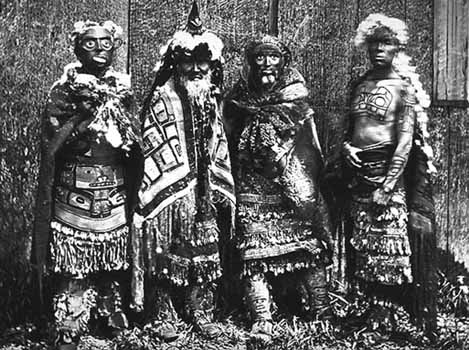
The history between the Native Americans and the Europeans need not be re-told for it is one that is known to all of us. It is common knowledge that the European conquerors that came to the New World not only brought with them disease and new technologies but also the end of a way of life that had existed for thousands of years.

What is not known, perhaps, is the reason why the two cultures clashed so violently and why even after the almost genocidal destruction of the Indians, the Whites furthered ensured that the survivors remained isolated from mainstream society by putting them on reservations and systematically eradicating the culture through the use of boarding schools – the latter being an institutionalized system that remained in place even through the 1950s. The result was a people that were internally fractured, riddled with problems like poverty, alcoholism, drug abuse, domestic violence, and suicide. But the destruction of the people specifically was not the ultimate purpose.

Life on the Res – modern day

While at first glance it may appear that the decision to eradicate the Indian peoples was similar to what is typically found in any other conquest, there is, I believe, much more to it – for the destruction of the Indians was not so much focused on eliminating a particular ethnic group or destroying a way of life but rather on eradicating a system of knowledge that posed a substantial threat to the dominant society.

The Indian people came to North and South America from Asia in various migrations, bringing with them much of the knowledge that was possessed by their ancestors in the Himalayas and Mongolian steppe. Among the things they brought with them were shamanistic practices that gave them the ability to traverse distances in ways that defied the principles of modern physics, the ability to channel an animal and acquire it powers, the ability to perceive and know things in mysterious ways, and the knowledge of how to affect people from remote distances - positively or negatively.

A Tibetan Shaman

This knowledge, if applied, posed a tremendous threat to White society not only because it meant they were subject to dangers for which they had no knowledge of how to combat but also because it challenged their understanding of the nature of reality and how they saw the world. To top it all off, it posed a serious challenge to Christianity – the theological foundation of European society - because only through the power of Jesus should one be able to do “miracles.” Anything else was inherently the work of the Devil. How could they explain, then, what these Indians were doing?

An Indian Shaman practices his craft

In essence, it was a Stone Age culture with “supernatural” knowledge caught in the midst of an industrialized society which neither acknowledged nor understood what these people, who were supposed to be more primitive, were able to do. And so, the decision was made to eradicate it.

The Lakota Sioux Medicine Man, Yellow Bird, lies dead after the Wounded Knee Massacre, 1890

Fortunately, despite their best efforts, the knowledge did survive in small pockets and has been transmitted down. Whether it remains as vast and potent as it once was, however, is impossible to say as it seems as if much has been lost along the way.

Lost in Time

So in the end, the ultimate aim of the Indian genocide was achieved: the knowledge that they carried was largely forgotten. This is not only confirmed by individual Indians but also by shamans well-known to White society like Rolling Thunder and Don Juan Matus. Fortunately, however, in the 1960s a renewed interest in the Old Ways led to increased awareness of the plight of the people and the system of knowledge they maintained and, as a result, efforts were made to ensure its survival - within limits. Now Indians are able to practice without fear of direct persecution and the younger generation is able to learn its ways. One can only hope they will be able to carry it on.


Job of the Future


Friday, July 29, 2011

I'm a Wannabe Airborne Ranger

Anders Behring Breivik, perpetrator of the July 23, 2011 Norway attacks


Member of a state militia


The Real Deal

Thursday, July 28, 2011

When the Wind Blows

There are moments in history in which the course of events is suddenly and radically altered and in that short time span an Old World dies and a New World emerges out of the ashes. While it is tempting to think that all change is for the better and in furtherance of some evolution towards order, a brief look at human history over the last 3,000 years will show that this is not always the case, at least in the short term (500 or 1,000 years). The fall of the Roman Empire, for example, led to the Dark Ages in Europe from which the continent did not emerge for a millenium. The political, social, and economic structure that the Romans had created and spread across the known world was replaced by fuedalism, a decline in literacy and culture, and poverty. While it must be admitted that the Dark Ages possess an alluring fascination and romantic appeal it was probably not a sentiment shared by those who had to live through it.


Life in the Middle Ages was "nasty, brutish, and short"

A similar decline took place in Asia with the fall of the Qing Dynasty in China in the late-19th and early 20th centuries. A marvelous civilation with a history that stretches back 5,000 years was reduced to a fractured nation buckling under mass starvation, political turmoil, and foreign occupation. Established rigorous civil service exams that dated back thousands of years and that tested literacy, math, law, military strategy, and the Classics, were replaced by corruption and cronyism. Society crumbled and hundreds of millions suffered.


The Chinese Civil Service Exam

Witnessing the increased turmoil in the world over the past decade I fear that we may be entering such a moment of radical upheaval. Increased social and political instability, the outbreak of numerous regional wars, economic crises, water shortages, radical climate change, frequent and unprecedented natural disasters, and the real possibility of nuclear terrorism have brought us to the brink of collapse. All these paint a picture of a coming apocalypse. But perhaps not in the Biblical sense.

In Old Norse mythology, Ragnarok is the climactic battle in which the world is destroyed and from which a New Age emerges. While I'm sure some Vikings took this quite literally, I believe that, in accordance with the general patterns of myths, the transformation represented is a symbolic one.


One possible outcome

The destruction, then, may not mean literal destruction but rather the end of the present Consciousness and the emergence of a new, higher Conciousness. It is, essentially, the death of one way of understanding and perception, and the birth of a new one. So perhaps it's not that the world is going to end on December 21, 2012 (the date on which the Mayan Calendar ends) but rather that the world as we know it will end. And that may not be a bad thing.


Turin looks to the Future

Human consciousness has, for the last few thousands years, remained largely constant. People today have the same general understanding of phenomena and their place in the Cosmos as their ancestors in the 3rd century B.C. had, with some slight variations to account for regional and cultural differences. On the whole, though, most people have a framework within which they view themselves and understand their relationship with external phenomena. That has remained largely unchanged for thousands of years. It is for this reason that The Odyssey and Romeo and Juliet still resonate with Modern Man - for he can see himself in the characters he reads about from ancient times.


Odysseus and the Sirens (12th century B.C.)


Ulysses and friends meet the Sirens in O Brother, Where Art Thou? (1937 A.D.)

For the past 5,000 years of recorded human history there has been a phenomenal increase in knowledge. The past century alone saw the advent of aviation, space travel, nuclear power, and electronics. Mankind now has the ability to create tools that can take him to the stars. And it has come at a price.


Hiroshima, 1945

For while knowledge has vastly increased, wisdom hasn't. In general Modern Man is not much wiser than his medieval peasant great-gandfather. If he were, then the wisdom of the Tao Te Ching would be common knowledge. Instead, he harbors the same limited understanding about the effects of his actions except that now has unprecedented power. He is a cave man with an Inter-Continental Ballistic Missile.


"Nuke those Commies!"

In short, he fails to see the interconnectedness that surrounds him and how he is inseparably linked to his environment; instead only focusing on short-term tangible results. So he starts wars for profit, pursues strategies that provide short-term material benefit, and analyzes every situation in terms of how he, himself, can gain. What he fails to see is that what he does to others, he does to himself.


You are Here

While knowledge comes from our own analytical ability, wisdom comes from an entirely different source. It comes from the depths of the Universe and gives us an understanding of the relationship that exists between events. It implies an understanding of Cause and Effect - seeing how current circumstances are the the result of past causes and how choices in the present will manifest as effects in the future. Not suprisingly, when we have the wisdom to see Cause and Effect, we make very different choices.

Given our abundance of knowledge and our severe lack of wisdom we have reached a point where we will have to change what we do or risk self-destruction. The current volatility and instability on this planet is a manifestation of the internal lack of harmony in our own minds. The planet is sick because we are sick. And we are not separate. As a race we have to learn to see beyond obvious, short-term effects and look farther ahead, to see the real consequences of our choices - and how they last for infinity.


Ripples travel to the edge of the pond

Soon we will be faced with a stark choice: change or die. I believe we will change and that a New Age of higher Consciousness and awareness will be ushered in. I suspect it's always been part of the plan - part of the Universe's game of self-discovery and development. But when the wind blows, I fear it'll take everything we've got to make it through.


When the Wind Blows (1986)

Wednesday, July 27, 2011

Review: Throne of Blood

Kurosawa's 1957 masterpiece, Throne of Blood, is an adaptation of Shakespeare's Macbeth, set in 14th century medieval Japan. It tells the story of one General Taketoki Washizu (played by the charismatic Toshiro Mifune) who murders his lord and usurps power through manipulation and treachery, ultimately to suffer his demise at the hands of his own men.


Perhaps the darkest of the Kurosawa samurai epics, it was filmed on the slopes of Mt Fuji where Kurosawa had an entire medieval castle built to serve as the set for the film. The elevation being so high, the area was a barren wasteland and fog covered the ground most of the time, giving the film a bleak, stark tone - consistent with the story itself.


One of the most interesting aspects of the story itself is the role which General Washizu's wife, played by Isuzu Yamada, has in orchestrating the entire plot. For although her husband is the lord of the castle she is truly the one calling the shots. This relationship brilliantly captures the nature of feminine power - subltle, dark, yielding - and yet clearly as powerful as the more overt male. It is an interesting manifestation of the yin-yang principle in which the yielding yin submits to the dominant yang and the male yang then, in turn, submits to the dark yin.


Lady Washizu suggests the murder

Ultimately, Lord Washizu's dramatic fall from grace is a vivid testament to the short-sightedness of greed and the desire for power. It is also a poignant example of the principle of karma. With stunning cinematography, powerful acting, and a mysterious atmosphere of foreboding that is unparalleled in any other Kurosawa film, this publication endorses this cinematic masterpiece with the greatest enthusiasm.


Lord Washizu's demise

Monday, July 25, 2011

The Razor's Edge


"The sharp edge of a razor is difficult to pass over; thus the wise say the path to Salvation is hard.
"

-Katha-Upanishad


I am Death


[To decide who begins in the game of chess that will determine his fate, the knight hides a piece in one hand, but Death chooses the empty hand.]

Knight: Black for you!
Death: It becomes me well.

-The Seventh Seal

Friday, July 22, 2011

Politics As Usual

Some things haven't changed: political wrangling in Massachussetts in the 1780s (Shay's Rebellion)

Fire

"Self-portrait, Anger"

-Photograph by Nicole Tamashiro

Thursday, July 21, 2011

The Litany Against Fear

I must not fear.
Fear is the mind-killer.
Fear is the little-death that brings total obliteration.

I will face my fear.

I will permit it to pass over me and through me.

And when it has gone past I will turn the inner eye to see its path.
Where the fear has gone there will be nothing.
Only I will remain.

- Dune

Monday, July 18, 2011

Better Call Saul

"We don't need a criminal lawyer, we need a criminal lawyer."


-Pinko, Breaking Bad

Courage


Monday, May 2, 2011

Takedown!

President Obama and senior national security personnel monitor the raid to kill bin Laden, May 1, 2011

Saturday, April 16, 2011

End of an Era


Crockett: So, you really gonna go back up to the Big Bad Bronx?

Tubbs: Yeah, looks that way. How 'bout you?

Crockett: Nah, somewhere further south...Somewhere where the water's warm and the drinks are cold and I don't know the names of the players.


- Miami Vice